Mindfulness has become one of the most widely taught forms of meditation in the world, used in schools, hospitals and workplaces. Rajyoga meditation, taught by the Brahma Kumaris, is also practised in many countries. People often ask how the two compare.
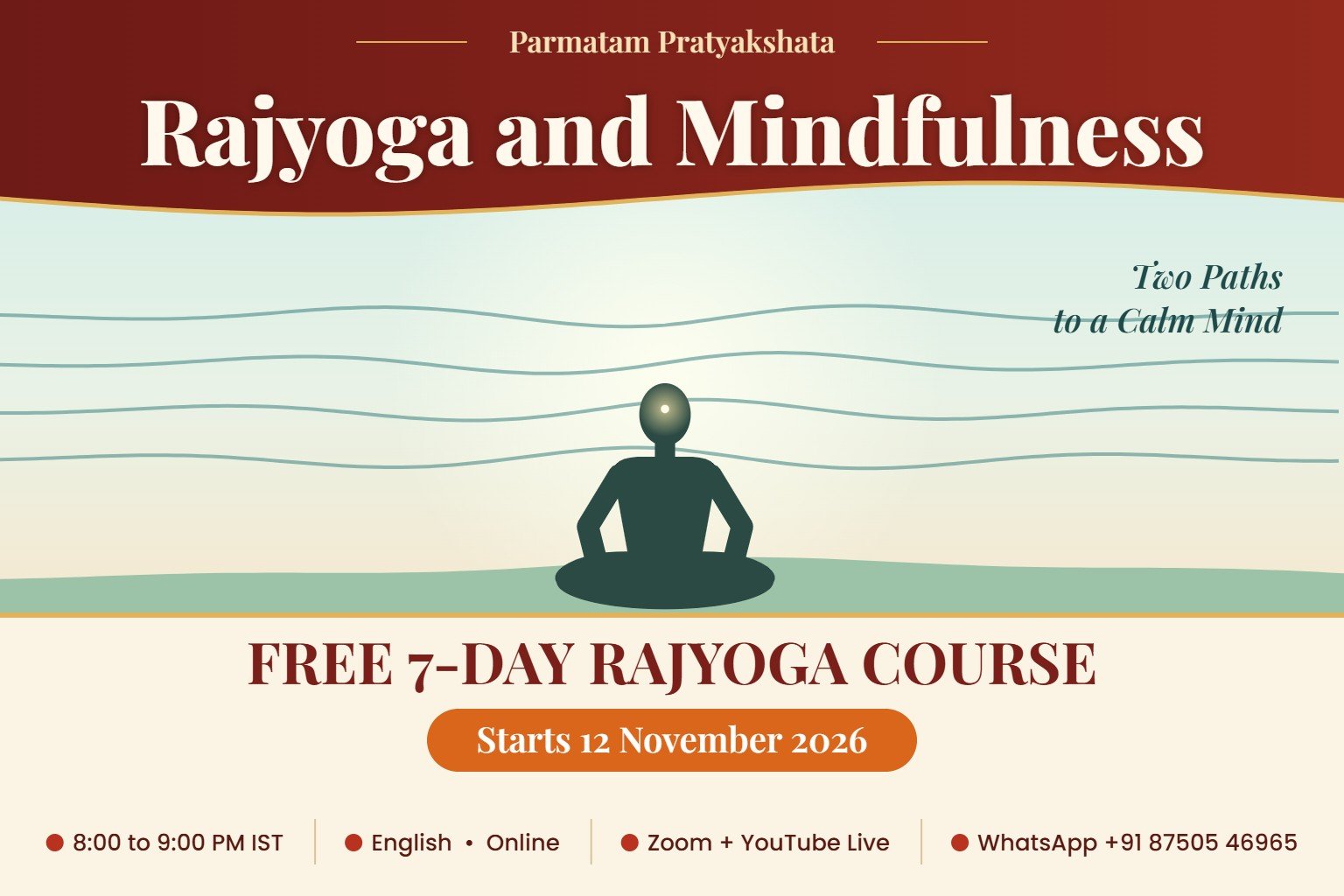
This article sets out the similarities and differences fairly, so you can decide what suits you. The free 7-day Rajyoga course in English begins on Thursday, 12 November 2026, from 8:00 PM to 9:00 PM IST.
What mindfulness is
Mindfulness means paying attention to the present moment, on purpose and without judgement. It draws on Buddhist meditation traditions and was popularised in a secular form by programmes such as Mindfulness-Based Stress Reduction, developed by Jon Kabat-Zinn in 1979. A typical practice is to observe the breath, body sensations or thoughts as they arise.
What Rajyoga is
Rajyoga is a spiritual practice that begins with the awareness of the self as a soul and develops into a loving connection with the Supreme Soul. Instead of only observing thoughts, the practitioner gently creates positive thoughts about the self, such as “I am a peaceful soul.” It is usually practised with the eyes open. You can read more in Who Am I? Soul consciousness in Rajyoga.
Side by side
| Aspect | Mindfulness | Rajyoga |
|---|---|---|
| Main focus | Present-moment awareness | Awareness of the soul and the Supreme Soul |
| Approach to thoughts | Observe without judgement | Choose and create peaceful thoughts |
| Common anchor | Breath or body sensations | A thought about the self or the Supreme Soul |
| Spiritual framework | Often secular | Spiritual, open to all backgrounds |
| Eyes | Often closed | Usually open |
| Daily life | Mindful eating, walking, listening | Soul consciousness and spiritual powers in action |
What they share
- Both train attention and help you notice reactions before acting.
- Both can be practised for a few minutes a day and built up gradually.
- Both encourage kindness towards yourself when the mind wanders.
- Both can be carried into ordinary activities, not only formal sitting.
Can you practise both?
Many people do. Some use a few breaths of mindful awareness to settle, then shift into Rajyoga remembrance. Others find one approach suits them better. There is no requirement to give up a practice that helps you.
How to decide
If you want a practice without any spiritual framework, mindfulness may feel more comfortable. If you are interested in questions such as “Who am I?” and want a personal connection with the divine as part of meditation, Rajyoga offers that. The best test is experience: try each for a week and notice the effect. Our Rajyoga myths and facts article answers common doubts.
Questions about Rajyoga and mindfulness
Is one more effective than the other?
People respond differently. Choose the practice you can sustain and that feels meaningful to you.
Does Rajyoga use the breath?
A few calm breaths can help you settle, but the breath is not the main focus of Rajyoga.
Is either a substitute for treatment?
No. Meditation can support wellbeing but does not replace professional medical or psychological care.
Join the free Rajyoga course on 12 November 2026
The next free 7-day Rajyoga meditation course in English begins on Thursday, 12 November 2026. Beginners are welcome, and no earlier experience of meditation is needed.
- Time: 8:00 PM to 9:00 PM IST
- Duration: Seven days
- Language: English
- Fee: Free, open to seekers worldwide
- Format: Live online classes on Zoom, with YouTube Live details shared in the WhatsApp group
All course updates and Zoom joining details are shared in the group. Save the session time in your calendar. If you live outside India, see our time zone guide before the first class.
For course enquiries, message +91 87505 46965 on WhatsApp or email hiteshchhabra91@gmail.com. Read the complete course announcement for full details. Please check with the organisers about recordings or certificates; neither is promised here.
