Irritation arrives quickly. A delayed delivery, a sharp remark or a crowded road can change our mood in seconds. Worry works more slowly, returning again and again to the same question. Both can leave us tired and less like ourselves.
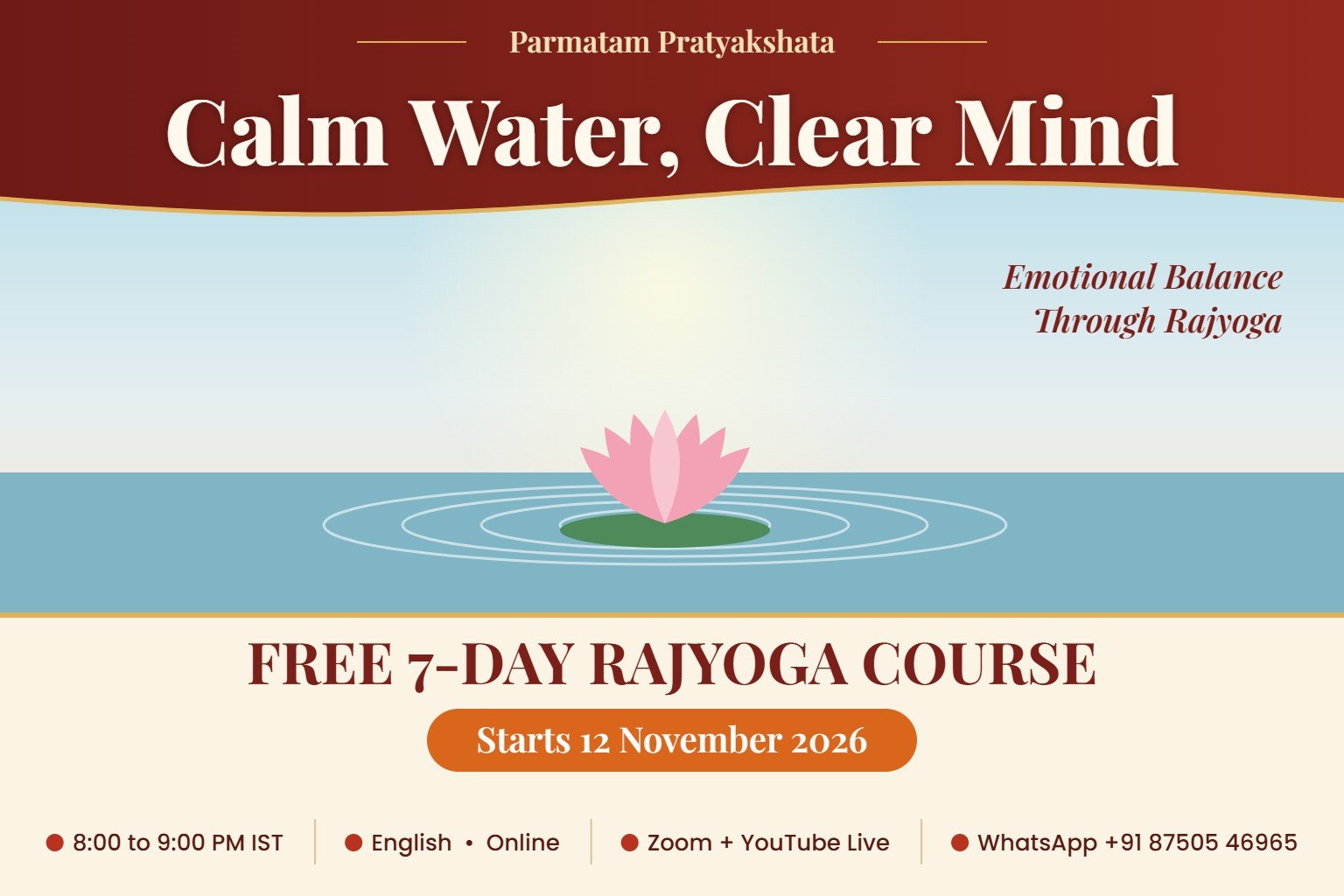
Rajyoga does not ask you to pretend you feel nothing. It offers a way of observing emotions from a steadier place. This article shares simple practices for emotional balance in daily life. You can learn the full foundation in the free 7-day course in English, starting Thursday, 12 November 2026, from 8:00 PM to 9:00 PM IST.
The observer, not the storm
A central idea in Rajyoga is awareness of the self as a soul, the being who thinks and feels. From this awareness, an emotion becomes something you experience rather than something you are. “I am angry” can become “I am noticing anger.” The difference is small in words, but it creates room to choose.
A three-step pause for irritation
1. Notice
Recognise the early signs: a tight jaw, a faster heartbeat, a sharp sentence forming in the mind.
2. Step back
Take one slow breath and silently say: “I am a peaceful soul.” You are not suppressing the feeling. You are reminding yourself of your original nature.
3. Choose
Ask: what response would I be comfortable with tomorrow? Sometimes that is silence; sometimes it is a calm, clear statement.
Working with worry
Worry often repeats the same story. Writing it down can slow the cycle. Divide a page into two columns: what I can do, and what I cannot control. Take one small action from the first column. For the second, spend a few minutes in remembrance of the Supreme Soul with a feeling of trust, and set a time to review the issue later instead of revisiting it all evening.
This is a reflective exercise, not a substitute for professional help. If anxiety, low mood or anger feel overwhelming or persistent, please speak with a qualified counsellor or doctor.
Build balance before you need it
Emotional balance is easier when the mind is rested regularly. Short pauses spread through the day, known in the Brahma Kumaris tradition as traffic control, help prevent stress from building up. Read our guide to the one-minute traffic control pause for a simple way to begin.
Questions about emotions and Rajyoga
Does Rajyoga mean I should never feel angry?
No. It invites you to notice emotions early and respond with awareness. Feelings still arise; what changes is how much they control your actions.
What if I react before I remember to pause?
Reflect afterwards, without harsh self-judgement. Each review makes the next pause a little easier.
Will the course cover emotions directly?
The course introduces the spiritual foundation of Rajyoga. These exercises are optional personal reflections and do not describe the day-by-day syllabus.
Join the free Rajyoga course on 12 November 2026
The next free 7-day Rajyoga meditation course in English begins on Thursday, 12 November 2026. Beginners are welcome, and no earlier experience of meditation is needed.
- Time: 8:00 PM to 9:00 PM IST
- Duration: Seven days
- Language: English
- Fee: Free, open to seekers worldwide
- Format: Live online classes on Zoom, with YouTube Live details shared in the WhatsApp group
All course updates and Zoom joining details are shared in the group. Save the session time in your calendar. If you live outside India, see our time zone guide before the first class.
For course enquiries, message +91 87505 46965 on WhatsApp or email hiteshchhabra91@gmail.com. Read the complete course announcement for full details. Please check with the organisers about recordings or certificates; neither is promised here.
