“As you sow, so shall you reap.” Most of us have heard some version of this idea. The law of karma is one of the most familiar spiritual principles in India, yet it is often misunderstood as fate or punishment.
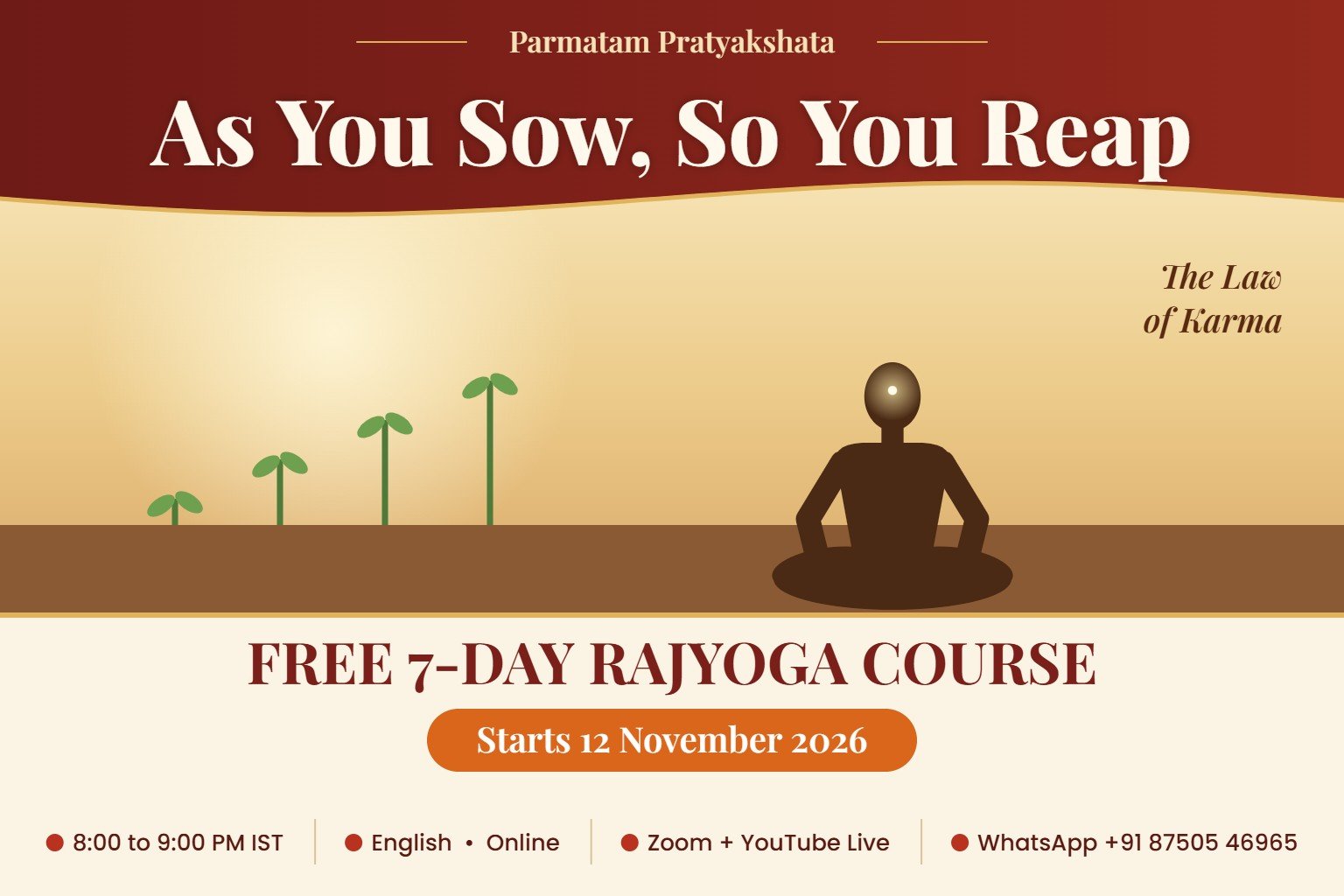
Rajyoga, as taught by the Brahma Kumaris, explains karma as a law of cause and effect that applies to every thought, word and action. This article sets out that view in simple terms. The law of karma is one of the topics of the free 7-day Rajyoga course in English, starting Thursday, 12 November 2026, from 8:00 PM to 9:00 PM IST.
Karma means action
The word karma simply means action. Every action carries an intention, and the quality of that intention shapes the result. In Brahma Kumaris teaching, actions done in soul consciousness, with peace and good wishes, are described as elevated; actions driven by anger, greed or ego bring sorrow sooner or later.
Thoughts are seeds
Rajyoga gives special attention to thoughts, because every word and action begins as a thought. A useful image is a seed: a repeated thought becomes an attitude, attitudes shape habits, and habits shape the way our life unfolds.
- Thought: “They never value my work.”
- Attitude: resentment towards colleagues.
- Action: withdrawn or sharp communication.
- Result: distance in relationships, which seems to confirm the first thought.
Changing the seed, for example to “I will do my best and communicate clearly,” changes the whole chain.
Karma is not fate
A common misunderstanding is that karma means we are helpless. Rajyoga teaches the opposite. While we cannot always change what comes to us from the past, we always choose how to respond now, and that response is new karma. The Brahma Kumaris describe this law in their foundation course outline.
Settling old accounts gently
When something difficult happens, Rajyoga encourages a calm attitude: respond with patience rather than adding fresh anger. Remembering “this situation will pass; my response is my responsibility” helps prevent a cycle of reaction and counter-reaction.
A daily karma reflection
At night, spend three minutes reviewing the day:
- Which thought or action today came from peace and goodwill?
- Where did I react in a way I would like to change?
- What one seed do I want to plant tomorrow?
Keep it short and kind. The aim is awareness, not self-criticism. Our gratitude reflection journal pairs well with this review.
Questions about karma
Does good karma mean nothing bad will happen?
No. Difficult situations can still arise. Rajyoga focuses on responding to them with strength and creating good karma for the future.
Does intention matter more than the action?
Both matter. In this teaching the intention shapes the quality of the action, and the action affects others, so both are part of karma.
Is karma covered in the course?
Yes. The law of karma is one of the core subjects of the 7-day course.
Join the free Rajyoga course on 12 November 2026
The next free 7-day Rajyoga meditation course in English begins on Thursday, 12 November 2026. Beginners are welcome, and no earlier experience of meditation is needed.
- Time: 8:00 PM to 9:00 PM IST
- Duration: Seven days
- Language: English
- Fee: Free, open to seekers worldwide
- Format: Live online classes on Zoom, with YouTube Live details shared in the WhatsApp group
All course updates and Zoom joining details are shared in the group. Save the session time in your calendar. If you live outside India, see our time zone guide before the first class.
For course enquiries, message +91 87505 46965 on WhatsApp or email hiteshchhabra91@gmail.com. Read the complete course announcement for full details. Please check with the organisers about recordings or certificates; neither is promised here.
